

Finding the best portable air cooler for RVs matters when your rig heats up fast, especially when you’re parked with limited shade or relying on small roof vents. Cracked windows and basic fans only go so far, and running the built-in A/C isn’t always practical when power is limited.
That’s why RV owners are turning to portable air coolers. These units are compact, easy to move, and can cool small spaces without the power draw of full air conditioning. They work in almost any setup and don’t require permanent installation—the only real challenge is figuring out which one fits your needs the best.
This guide breaks down the best portable air coolers for RVs you can order today. By the end, you’ll know exactly what to look for and which cooling system gives you the most comfort on the road.
Table of Contents
Best Portable Air Coolers for RVS
There are many types of portable air coolers that can cool your RV. Let’s look at the best options to stay cool anywhere you park.
- Cool Boss Evaporative Air Cooler CL-50R

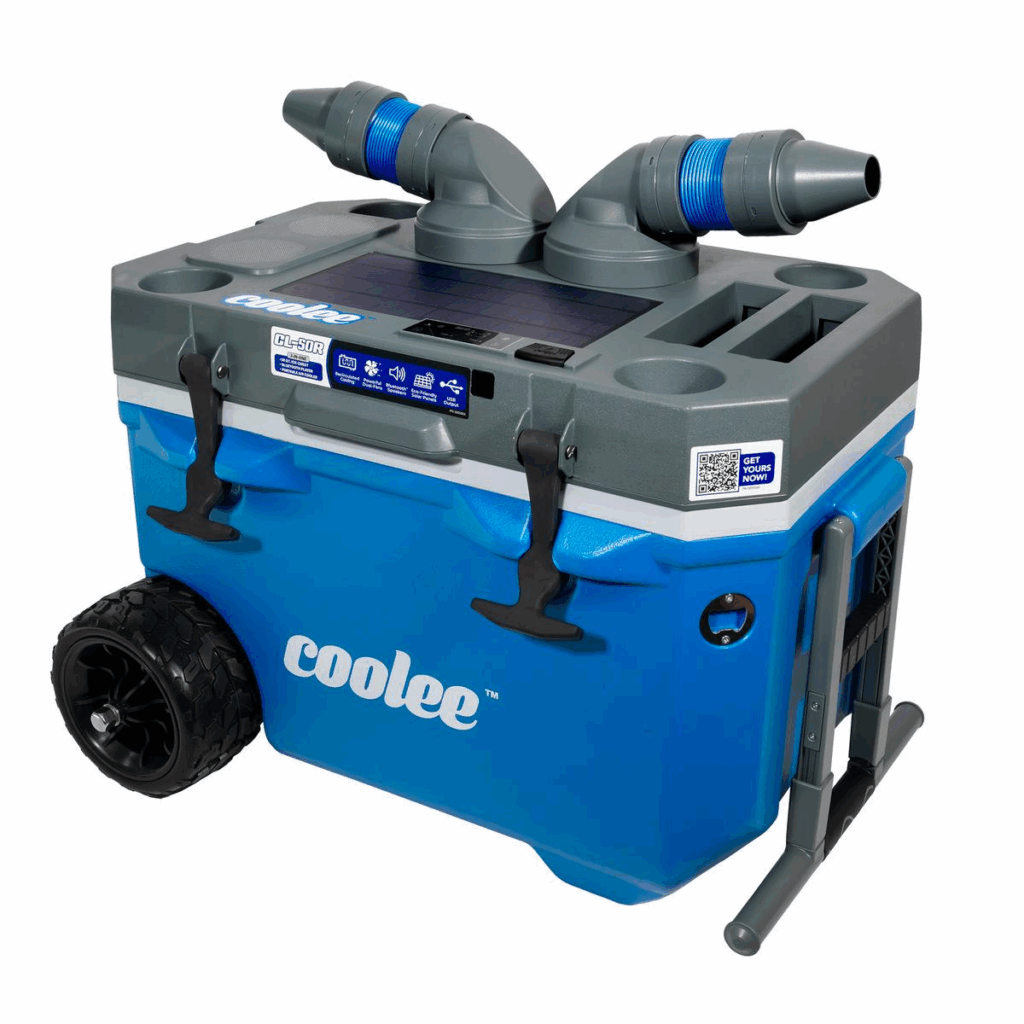
The Cool Boss CL-50R is a portable air cooler and ice chest built into one rolling unit. RV owners love it because they get extra cooling without tapping into their main power supply. It cools the air by blowing it across ice and water stored inside the insulated bin and releasing a steady stream of chilled airflow near your seating area, bed, or outdoor setup.
The built-in dual batteries and solar panels let you run the cooler for hours without plugging in, which is a huge advantage when you’re off-grid or conserving power. It works inside the RV and outside for cooling you off while you’re sitting around camp. The built-in storage, wheels, and speakers make it easier to move, stash gear, and stay comfortable while you’re set up outside.
Features:
- 50-quart insulated ice chest
- Dual 10,000 mAh rechargeable lithium-ion batteries
- Top solar panel with an additional fold-out solar panel
- Quick-mount velocity cooling nozzles
- Premium Bluetooth stereo speakers
- All-terrain oversized wheels
- Telescoping pull handle
- High-capacity built-in power bank
- 110V and 12V charging options
Pros:
- Delivers chilled airflow without draining the RV’s electrical system
- Rolls easily around campsites or between RV rooms
- Stores drinks, food, and ice
- Recharges on solar power for extended off-grid use
- Plays music through built-in Bluetooth speakers
Cons:
- Requires ice to keep drinks cool
- Cool Boss Evaporative Air Cooler SL-240

The Cool Boss SL-240 is a compact 3-in-1 unit that works as a portable air cooler, soft-sided ice chest, and Bluetooth speaker. This is great for RV owners who want cooling they can carry from room to room. It works by blowing air across ice and water stored in the cooler to give you a clean stream of chilled airflow without tapping into your RV’s main power.
The lightweight design and shoulder strap make it easy to use near the bed, dinner table, or outdoors while you’re parked. It fits right into camping setups without adding any bulky equipment.

Features:
- 10,000 mAh rechargeable lithium-ion battery
- Dual high-speed cooling nozzles
- Soft-sided insulated cooler body
- 14-quart storage capacity
- Bluetooth stereo speakers
- Zippered open-top lid
- Detachable shoulder strap
- 110V and 12V charging cords
Pros:
- Delivers chilled airflow without relying on RV hookups
- Packs easily into tight RV cabinets or outdoor gear storage
- Doubles as a cooler and speaker for campsite use
- Carries comfortably with the shoulder strap
- Runs for hours on a single charge
Cons:
- Cools a smaller area compared to the CL-50R
- Coolzy Pro

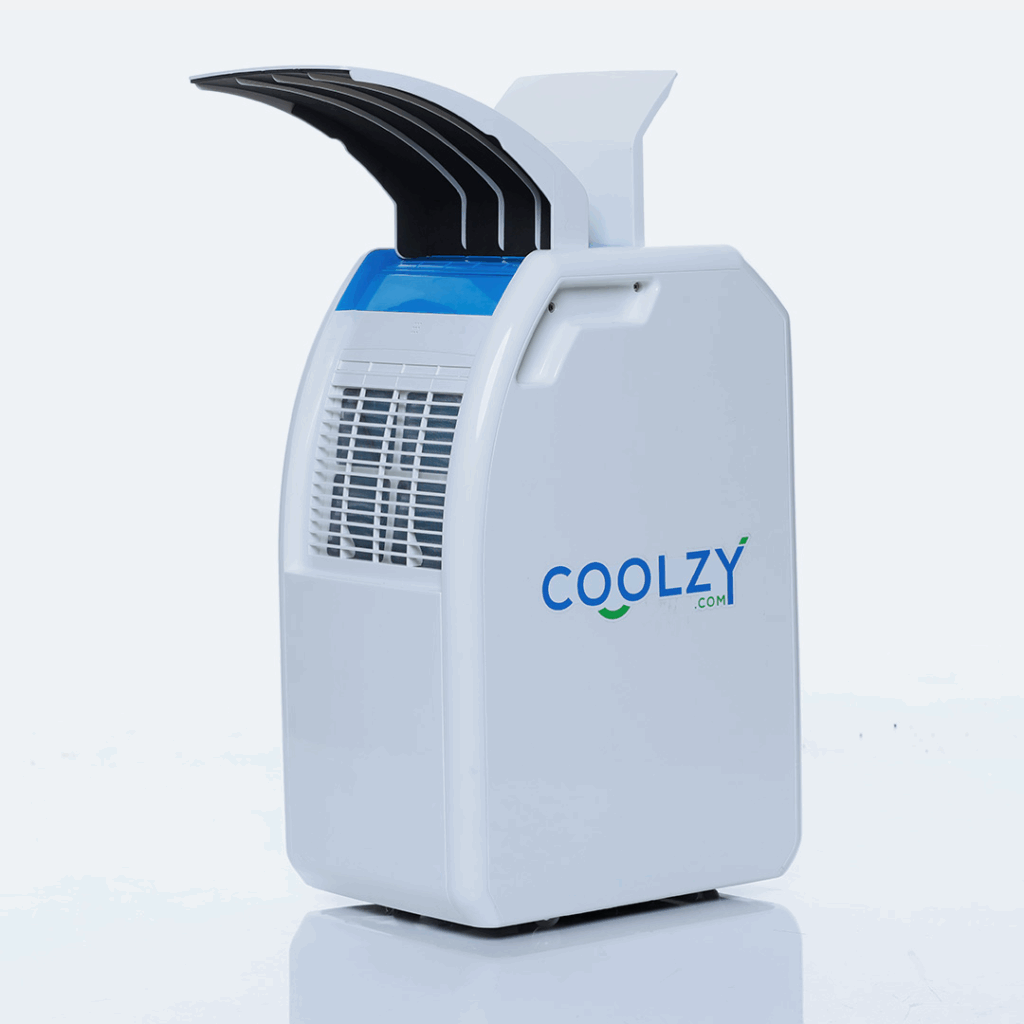
The Coolzy Pro is a small, plug-in portable A/C unit that can cool the person sitting directly in front. It uses a compact refrigeration system to blow cold air without installing vents or hoses. It doesn’t require window kits or exhaust tubes, so RV owners can use it as a “point-and-cool” option when they don’t want to run their main roof A/C. It’s still a traditional air conditioner, though, so it needs a steady power source and produces condensation you’ll need to empty.
Features:
- 340-watt power draw
- 1,100-watt cooling capacity
- Three fan speeds
- Removable condensation tray
- 120V power compatibility
Pros:
- Provides direct airflow
- Moves with built-in wheels and handles
Cons:
- Does not cool the whole RV
- Requires continuous power and cannot run on internal batteries
- EcoFlow Wave 3

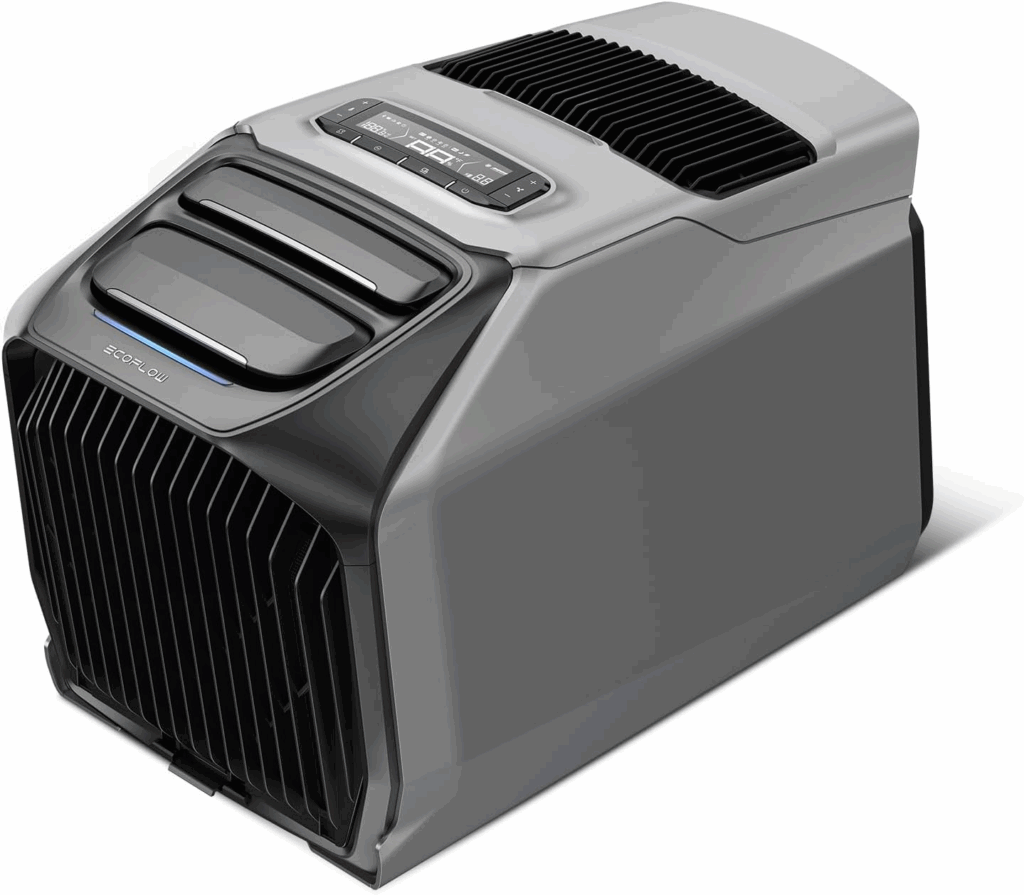
The EcoFlow Wave 3 is a portable A/C and heater that creates a focused pocket of cold or warm air for small RV spaces. It uses a compact refrigeration system to drop temperatures and can run cordlessly when paired with its optional battery pack. It still behaves like a traditional mini A/C, so it requires consistent airflow around the unit.
Features:
- 6,100 BTU cooling output
- 2,000W heating output
- Optional 1,024Wh battery
- Up to 8 hours cordless runtime with battery
- 120V power compatibility
- 44 dB sleep mode
Pros:
- Offers both cooling and heating in one unit
- Operates quietly in sleep mode
Cons:
- Requires users to drain the added condensation regularly
- Cools only a small section of the RV, not the full space
- Evapolar EvaChill

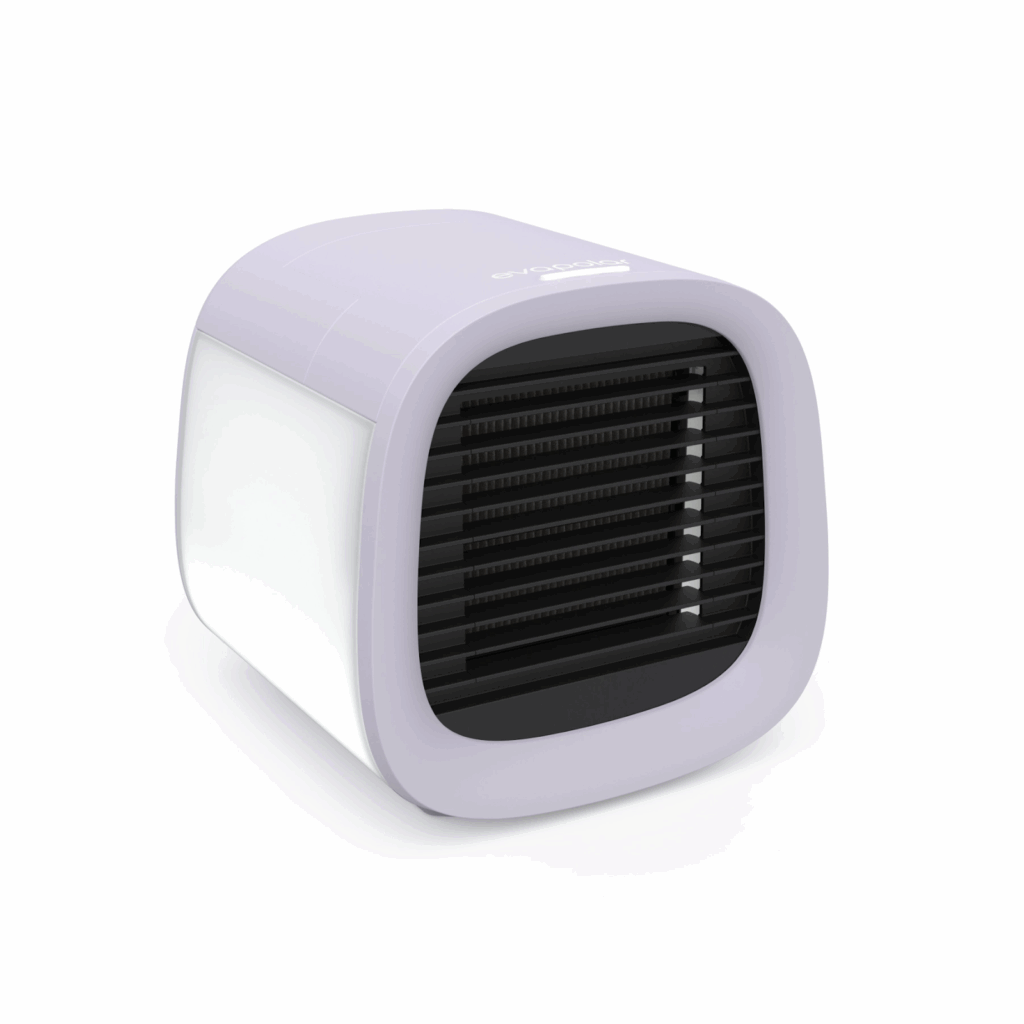
The Evapolar evaCHILL is a small evaporative cooler that provides a light breeze. It works by pulling warm air through a water-soaked cartridge, creating a gentle stream of cooler air without using much electricity. Its compact size and USB power allow it to run off a power bank or laptop.
Features:
- 7.5W power consumption
- 49.1 CFM airflow
- 800 ml water tank
- 3-8 hour refill cycle
- USB-powered
- 50 dB maximum noise
Pros:
- Runs on minimal power
- Sets up quickly
Cons:
- Cools a very small area
- Lacks ability to handle rough outdoor environments
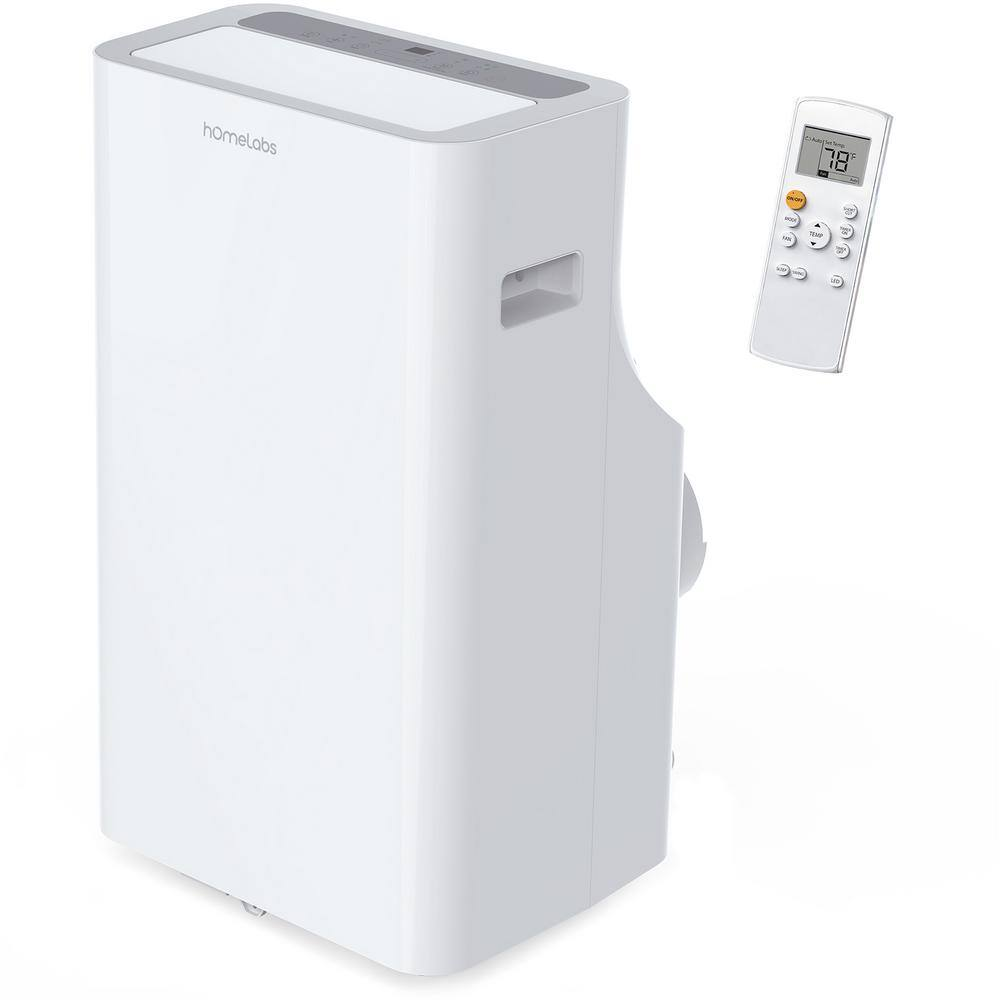
- hOmelabs Portable Air Conditioner

The hOmeLabs HM Series is a plug-in portable A/C that cools enclosed rooms through a standard vented exhaust hose. It uses a refrigeration system to lower the temperature in small spaces, so RV owners typically use it when parked with a suitable window or vent opening. The unit rolls on wheels and includes a full window kit. It cools more aggressively than evaporative models but requires more power and produces condensation.
Features:
- 12,000 BTU cooling capacity
- Washable air filter with indicator light
- Included exhaust hose and window slide adapter
- Remote control with multiple modes
- Automatic vertical swing airflow
- 300-450 sq. ft. cooling range
Pros:
- Lowers temperature quickly
- Moves easily on wheels for flexible placement
Cons:
- Requires an exhaust window, which limits where it can be used in an RV
- Draws more power than portable coolers or battery-based units
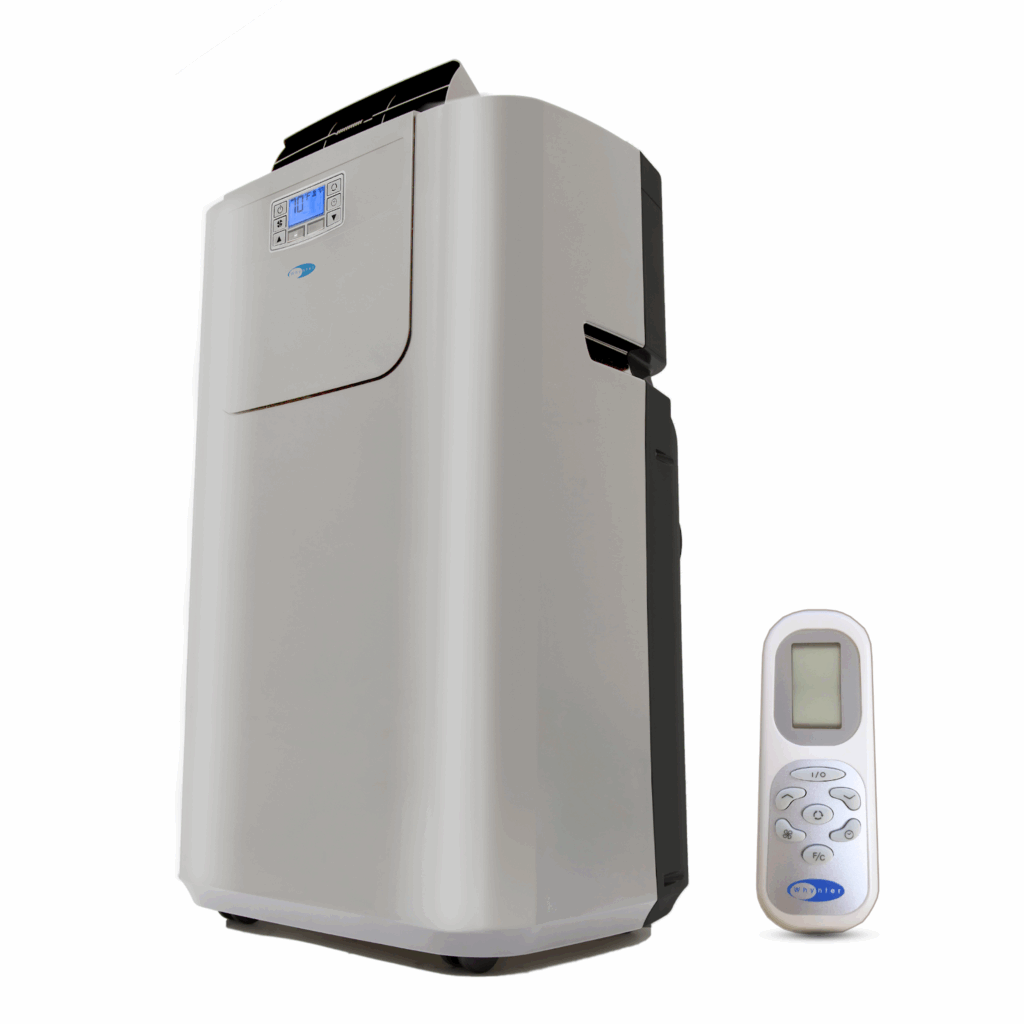
- Whynter Elite ARC-122DS

The Whynter ARC-122DS is a dual-hose portable A/C that cools enclosed rooms using a vented exhaust system. It uses a refrigeration setup to lower temperatures and remove humidity, which makes it more of a full cooling appliance than a quick spot-cooling device. In an RV, it’s typically used when parked with a suitable window opening since both hoses need space to vent outside. It requires higher power and dedicated space for the hose kit and drainage.
Features:
- 12,000 BTU cooling
- Dual-hose intake and exhaust system
- 194 CFM airflow
- 82 pints per day dehumidifying capacity
- 1200W maximum power draw
- Carbon filter and washable pre-filter
- 24-hour programmable timer
Pros:
- Cools enclosed RV rooms
- Reduces humidity
Cons:
- Requires two vent openings
- Needs space for drainage and hose setup
How do Portable Air Coolers Work?
Portable air coolers use a simple process to lower temperatures without relying on compressors or heavy power. Warm air gets pulled through a wet cooling pad, where the water absorbs heat and turns into vapor. As that happens, the air coming out of the cooler feels noticeably cooler and carries a light breeze instead of warm, stagnant air.
Because they rely on evaporation, these coolers work best when there’s fresh airflow like an open window, a vent, or a cracked door. They don’t chill air the way an A/C does, but they use far less electricity and keep small spaces comfortable without draining your RV’s power supply.
Choose the Best Portable Air Cooler for Your RV
Before you pick a cooling system, it helps to understand what actually affects performance inside an RV. Small spaces, limited power, and different floor plans all change how well a cooler works, so it’s worth thinking about these key factors:
Space Considerations
RVs don’t offer a lot of open floor space, so the size of the cooler matters a lot. Look at your walkway, kitchen area, or bedroom to see where a unit can sit without blocking any pathways. Smaller coolers fit better in tight layouts, while larger ones work only if you have a clear spot near a vent or window.
Compatibility
Not every cooler pairs well with every RV setup. Some units are meant for open living spaces, while others work best right next to a bed or seating area. Check the recommended square footage and make sure the airflow direction lines up with how your RV is arranged.
Power Requirements
Portable coolers vary widely in how much power they draw, so it’s important to match the unit to your setup. Some run on standard outlets, others on rechargeable batteries, and a few can drain your batteries faster than expected if they run nonstop. Consider whether you’re on hookups, using solar, or trying to stretch your battery life for as long as possible.
Ventilation
Evaporative coolers need a bit of fresh air to work properly. If your RV is sealed up tight, the air gets humid fast and the cooling effect drops off. Keeping a door cracked or a window slightly open helps the cooler cycle in dry air and push warmer air out.
Discover How the Best Portable Air Cooler for RVs Can Make the Difference
Now that you’ve seen how each cooler works and what type of cooling they offer, you’re ready to choose the setup that fits your RV. The right cooler keeps you comfortable without draining its battery, doesn’t take up too much space, or force you to run your main A/C every time the temperature climbs.
For RV owners who want reliable cooling without heavy power use, consider Cool Boss portable coolers. They run on rechargeable batteries, deliver chilled airflow with just ice and water, and stay portable enough to use inside the RV or outside at camp. With the right cooler on board, you can focus on having more fun traveling and resting more comfortably.
Explore Cool Boss portable coolers today.
Best Portable Air Cooler for RVs FAQs
How to cool an RV in 100 degree weather?
You need steady airflow and a cooling source that won’t drain your power. Most RV owners use a mix of shade, reflective window covers, cracked vents, and a portable cooler that can run for hours without pulling heavy wattage. Keeping air moving and relying on fresh outside air makes a huge difference when temperatures hit triple digits.
Will a portable AC cool an RV?
Yes, but it depends on the size of the RV and the AC unit’s power draw. Portable A/C units can cool small rooms well, but they use more electricity, create hot air that needs venting, and may overload smaller RV electrical systems. Portable air coolers are easier to run off limited power, especially when you’re trying to avoid using a generator all day.