

When you’re running a warehouse, garage, or production floor, heat climbs fast. That’s not just uncomfortable; it’s a compliance issue. OSHA requires employers to maintain workplaces free of recognized hazards, and excessive heat is one of them. Poor ventilation can put your team’s safety and performance at risk.
That’s why business owners love using the best industrial ceiling fans they can find. These large, high-powered fans move a lot of air volume to improve comfort, reduce humidity, and keep crews alert and productive through long shifts. Unlike standard fans, they can handle harsh environments and wide-open spaces where airflow really matters.
In this guide, we’ll look at some of the best industrial ceiling fans available, what makes them effective, and how they differ from commercial models. This will help you determine exactly which one will fit your space the best.
Table of Contents
What is an Industrial Ceiling Fan?
An industrial ceiling fan is a large, high-powered fan that can move massive volumes of air across wide, open spaces. Instead of focusing on speed like smaller residential fans, industrial fans focus on airflow. They aim to circulate hot, stagnant air off the ceiling and push cooler air where people work.
They’re commonly found anywhere heat, humidity, or fumes tend to build up, like warehouses, manufacturing plants, auto shops, barns, and gyms. Most use durable metal blades, high-torque motors, and long downrods to cover thousands of square feet from a single location.
People choose these fans over other cooling methods because they’re cost-effective and low-maintenance. Industrial ceiling fans don’t rely on ductwork or refrigerant. This makes them a great first step toward managing heat before turning to heavier equipment like A/C.
Industrial vs. Commercial Ceiling Fans
There’s some nuance between industrial and commercial ceiling fans. While they may look similar, they’re built for very different environments.
Industrial ceiling fans are geared toward large, open areas like warehouses, barns, and production floors. They feature wider blades, typically 8-24 feet, and powerful motors in order to move higher volumes of air. Businesses use them to help reduce heat stress, humidity, and stagnant air across wide spaces
Commercial ceiling fans are built for smaller or customer-facing spaces such as offices, restaurants, or gyms. They use smaller blades, typically 3-8 feet, and quieter motors. These are used in businesses to maintain a steady breeze without the intensity needed in industrial settings.
If you’re cooling a high-ceiling warehouse or garage, industrial fans are the better fit.
Best Industrial Ceiling Fans
Industrial ceiling fans come in all sizes and power levels, each built for different types of spaces and cooling needs. Below are some of the top options on the market you can buy today.
- Cool Boss

Cool Boss offers a strong lineup of HVLS ceiling fans that can move a massive amount of air in warehouses, factories, gyms, and hangars. Models range from 11 to 24 feet in diameter, each using a high-efficiency magnet motor that delivers smooth, low-speed airflow while keeping energy use low.
The CB-11HVLS, the smallest model, is a compact option for smaller industrial spaces, moving over 148,000 cubic feet per minute (CFM) with near-silent operation, while the CB-24HVLS, the largest model, covers massive facilities with just over 524,000 CFM of airflow.
All models feature durable steel-and-aluminum construction, intuitive panel controls, and ultra-quiet 40-decibel performance. Cool Boss HVLS fans reduce HVAC costs, eliminate hot and cold spots, and keep crews comfortable in even the toughest settings.
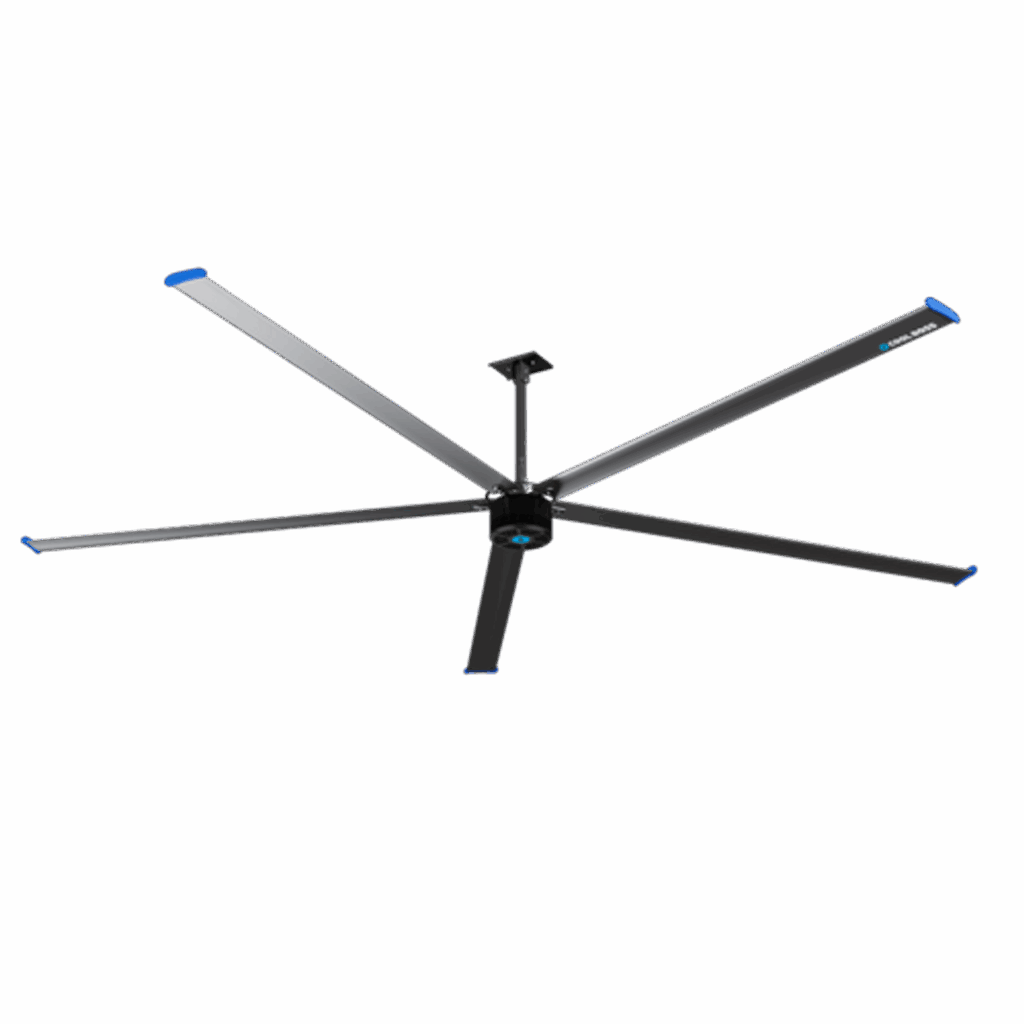
Explore Cool Boss’ industrial ceiling fan options.
- Barn Light Electric

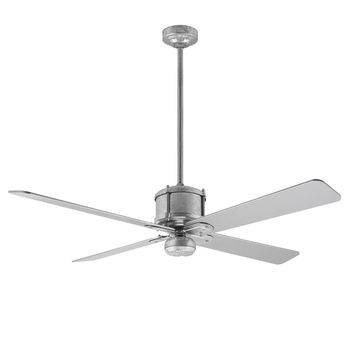
Barn Light Electric has an industrial ceiling-fan lineup that ranges from 36″ up to 60″ in diameter. They mostly cater to workspaces like barns, workshops, and smaller warehouse bays. Some options include features like forward and reverse operation and a down-rod setup for open-ceiling spaces. There are also weather-proof or damp-rated variants in their lineup to handle humidity or semi-outdoor setups.
- Big Ass Fans
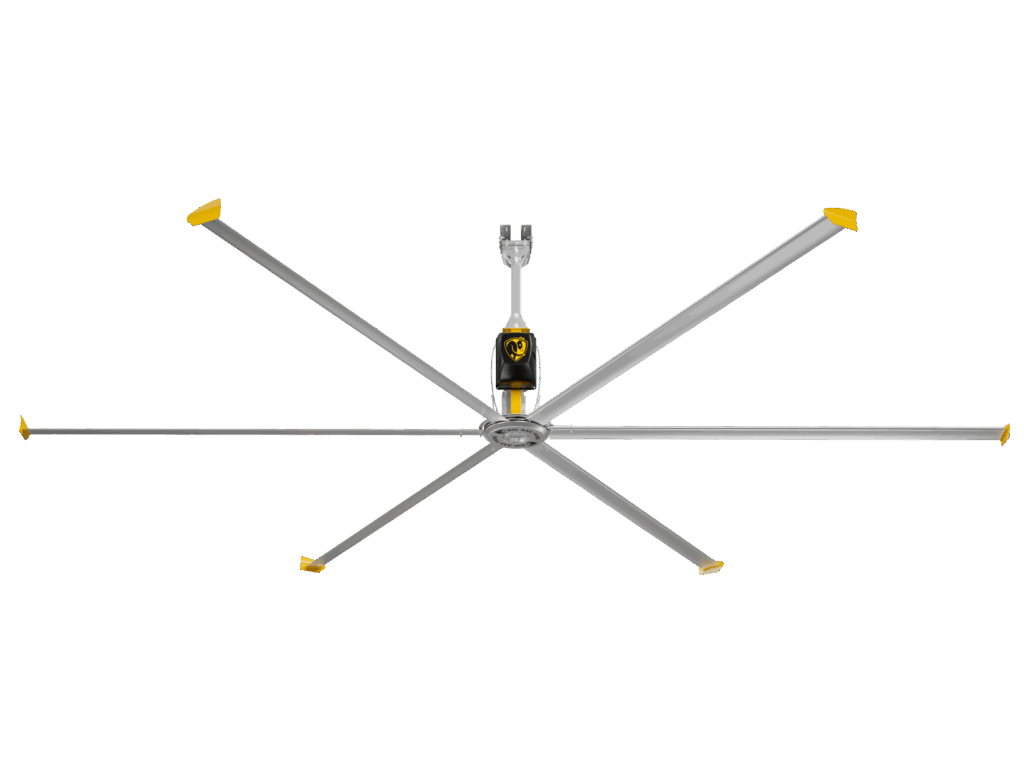
Big Ass Fans offers its E Series HVLS ceiling fans in diameters of 7 ft, 10 ft, and 12 ft. These fans use a gearless direct-drive motor and provide airflow similar to “51 regular-sized ceiling fans.” Mounting options include bar-joist brackets and compatibility with 110-125 V circuits for installation in industrial settings. Extras include integration with building control systems (BMS) and installation kits.
- Breezetech

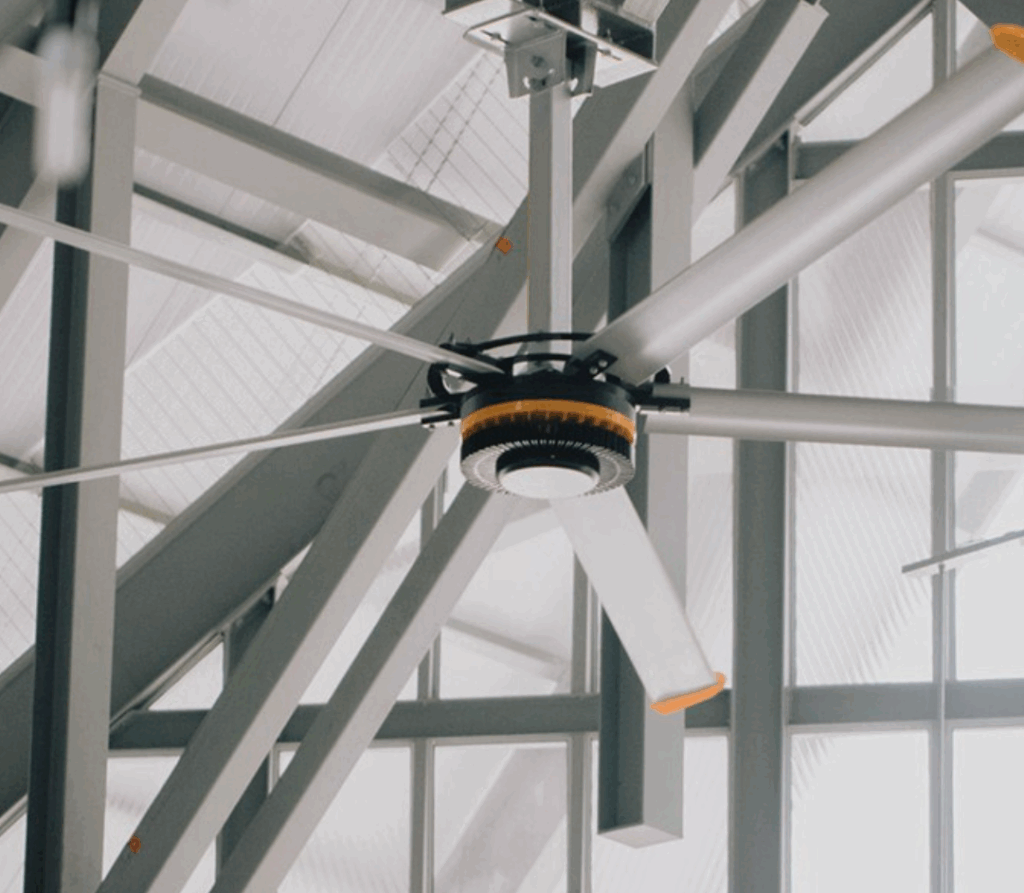
BreezeTech’s Eurus III Series is geared toward large spaces like warehouses, logistics centers, and stadiums. Each fan uses a permanent magnet synchronous motor (PMSM) that delivers airflow. A single unit can move up to 933,000 cubic meters of air per hour and cover roughly 2,000 square meters with diameters from 16 to 24 feet. The magnesium-aluminum blades and IP55 rating protect against dust and moisture, while the Danfoss and Schneider control systems allow speed control.
- Hunter Industrial

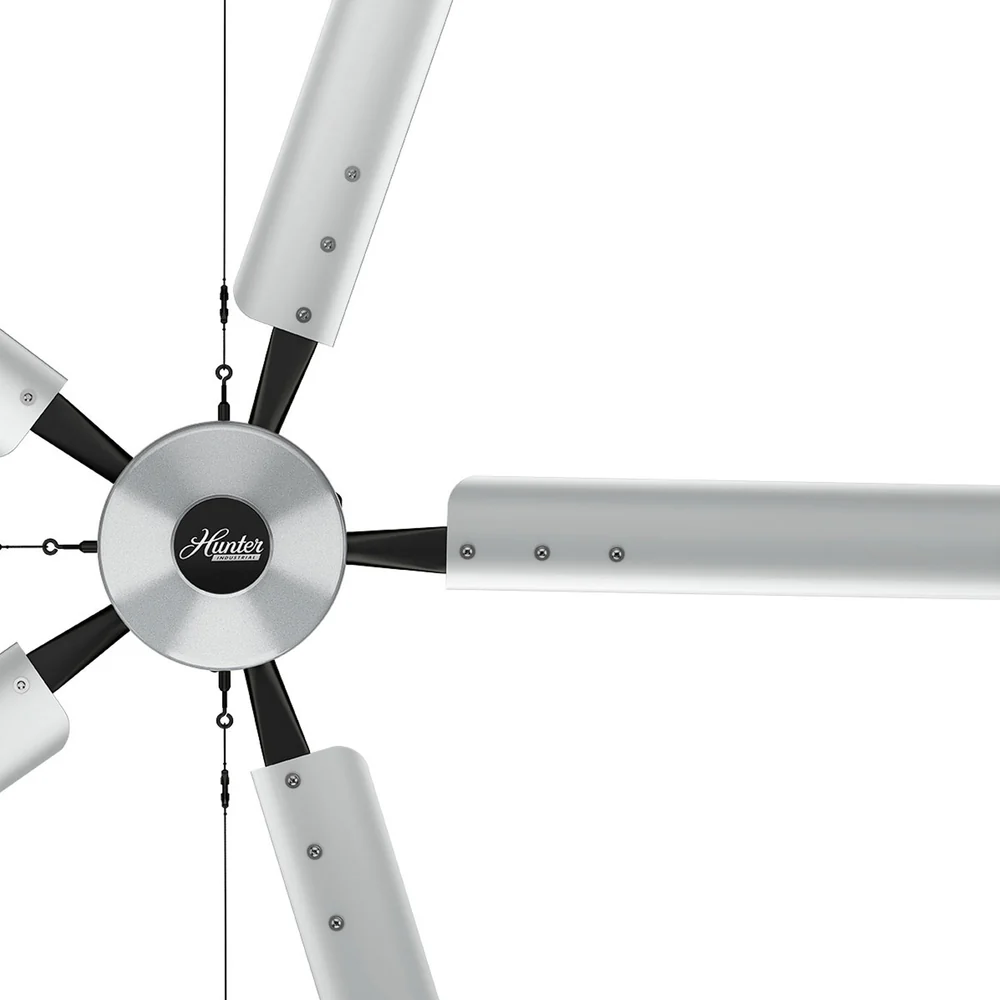
Hunter Industrial offers many HVLS models built for every scale of workspace. Their Titan, ECO, and XP fans range from large warehouse systems to smaller shop-sized units, while the DDI series focuses on simplified, high-torque performance. The lineup spans diameters from 7 feet to 24 feet and each uses energy-efficient motors, precision-balanced blades, and optional control systems that tie into building automation.
How to Choose the Best Industrial Ceiling Fans
Finding the right industrial ceiling fan comes down to matching your desired performance with your available space. Here’s what to focus on when comparing models for your facility.
- Number and size of blades: Look for larger diameters and fewer, wider blades. They move more air at lower speeds and cover bigger areas with less energy. A 20-24-foot fan can circulate air across thousands of square feet, while smaller 10-12-foot models work well for service shops or gyms.
- Power and circulation: Check both motor type and CFM rating to gauge performance. Direct-drive or magnet motors deliver powerful airflow with quieter, more efficient operation than traditional geared designs. You’ll want a fan that moves a high volume of air smoothly across the workspace, not one that just spins fast and loud.
- Blade material: Look for blades made from aluminum or steel instead of plastic or composite. Metal blades handle heat, humidity, and dust without warping or cracking, keeping performance consistent over years of daily use. A good set of corrosion-resistant blades can keep airflow steady and balanced even in hard conditions.
- Installation requirements: Before buying, check what kind of mounting system and power connection your building supports. Some fans plug into standard 110-230V power, while others need dedicated circuits or heavier ceiling joists for support. A good industrial fan should install cleanly with minimal wiring, so you get reliable performance without weeks of setup.
- Ceiling height compatibility: Measure from floor to ceiling and make sure the fan’s size and drop length fit safely in that space. HVLS fans need room to move air effectively, typically 20-30 feet of clearance from the ground for the largest models. In smaller shops or gyms, shorter downrods or compact designs can still deliver wide, even airflow without overwhelming the room.
Discover the Best Industrial Ceiling Fans With Cool Boss
Now that you know what to look for, you’re ready to find a fan that keeps your space cool and comfortable year-round. The right system will transform how your team works by cutting down heat stress, improving air quality, and reducing energy costs.
For facilities that need reliable performance on an industrial scale, consider Cool Boss. Their HVLS fans combine quiet magnet-motor power with rugged steel-and-aluminum construction to deliver consistent airflow across warehouses, shops, and hangars of every size. Choose from 11-foot models built for smaller work bays, all the way up to 24-foot systems that can handle open facilities.
Explore Cool Boss industrial ceiling fans.
Industrial Ceiling Fans FAQs
What is an HLVS fan?
An high-volume, low-speed (HVLS) fan is a large ceiling fan, usually 7 to 24 feet in diameter. These fans move a large amount of air at a slow speed. So instead of creating a fast breeze, it circulates air evenly throughout large spaces like warehouses or gymnasiums to improve comfort and reduce the load on HVAC systems. They’re made for areas where you need steady, widespread airflow rather than concentrated cooling.
What is the ideal distance from the ground for an industrial ceiling fan?
Industrial ceiling fans perform best when the blades are about 20 to 30 feet above the floor. This height allows the air column to spread efficiently without creating harsh drafts below. For lower ceilings or smaller-diameter fans, it’s recommended to have 8 feet of clearance from the blade to avoid accidental injury.
What is the highest quality ceiling fan brand?
The best industrial ceiling fan brand depends on your cooling needs. Cool Boss fans are among the best due to their large-scale performance, simple installation, quiet operation, and lower long-term energy use. If you want reliable, heavy-duty airflow without complex setup or maintenance, go with Cool Boss.